Grip strength is one of those things that often gets overlooked until you realize you’re struggling with heavy grocery bags, opening jars, or holding onto gym equipment. Whether you want to boost your athletic performance, get a firmer handshake, or just keep your hands and forearms healthy, improving grip strength can make a big difference in daily life. I’ll walk you through everything you need to know to build better grip strength and get more control in all kinds of situations.
Why Grip Strength Matters More Than You Think
Grip strength isn’t just about crushing handshakes or showing off at the gym. Building strong hands and forearms gives you better control in activities like climbing, racquet sports, weightlifting, and manual work. Even things like typing or using your phone can feel easier when your hands are strong. Studies have even linked healthy grip strength to better mobility as you age and even longer life expectancy (PubMed), so there’s a lot to gain from working on it.
Grip strength falls into three main types:
- Crush grip: What you use when squeezing something; think shaking hands or making a fist around a tennis ball.
- Pinch grip: Using your fingers and thumb together, like holding a book or pinching a bag’s zipper shut.
- Support grip: Holding onto something for a long time, like carrying shopping bags or hanging from a pull-up bar.
Getting Started with Grip Training
If you’ve never worked specifically on grip strength before, you’ll find a bunch of practical ways to get started that don’t require fancy tools or a gym membership. Here are some beginnerfriendly options that cover all the grip types and keep things simple.
- Squeeze a stress ball or tennis ball. This oldschool trick is lowkey but effective for building crush grip. Squeeze hard for a few seconds, then release. Doing this in sets rounds out a quick hand workout and can help relieve stress at the same time.
- Carry heavy objects. Farmer’s walks, where you just walk while holding something heavy, are super useful. Use buckets, grocery bags, or dumbbells if you have them. Start with lighter weights and build up slowly for safety.
- Hang from a bar. If you have access to a pull-up bar, just hanging for as long as possible does a lot for your support grip and even strengthens your shoulders and upper back.
- Pinch weight plates. If you lift, grab a couple of weight plates and pinch them together. No weights? Try pinching the edges of books or thick notebooks. This challenges your thumb and fingers to work as a team.
Stick to a routine of two to four sessions per week, and you’ll start to see progress in a few weeks. Like any training, consistency is really important for longterm improvement.
Step-by-Step Guide to Building Stronger Grip
Getting better at grip strength takes some planning, but the steps are straightforward. Here’s a simple plan that covers what you need to know:
- Warm up your hands and wrists: Rotate your wrists, open and close your fists, and do a few gentle stretches. This gets the blood flowing and helps avoid soreness or injury.
- Choose your exercises: Mix up the types so you hit crush, pinch, and support grips. Start with what feels challenging but not impossible. As you become stronger, you can move on to advanced options or add more weight.
- Train for reps and time: For squeezes or pinches, go for 10 to 15 repetitions per set. For hangs and carries, aim for 15 to 45 seconds per round, increasing as you get stronger.
- Rest between sets: Hands and forearms tire quickly, so give yourself at least 60 seconds to recover between attempts.
- Track your progress: Make a note of how long you can hang, how much weight you’re carrying, or how many reps you get before your grip gives out. Watching your numbers go up feels great and keeps you motivated. You can use a simple notebook or an app for this purpose.
Following this guide helps you avoid overdoing it and keeps your training balanced and safe. Gradually increase intensity to reduce injury risk and maintain motivation.
Things to Know Before You Go All In
Working on grip strength is pretty straightforward, but there are a few details to keep in mind. Here are some common challenges and useful ways to manage them:
- Recovery and soreness: Your hands may feel sore when you start out. If you notice pain or swelling, take a break for a couple of days and ease into it again. Don’t worry, mild soreness is part of the process.
- Imbalance between hands: If your dominant hand is much stronger, do a few extra reps with your weaker side or start sets with that hand so it gets the most effort.
- Overuse injury: Try not to go overboard with daily squeezing or gripping exercises. Too much work can make your hands ache or even lead to tendinitis. Listen to your body and rest when needed.
- Grip aids and tools: Devices like grip trainers, fatgrip attachments for weights, and hand grippers can help, but you don’t need them from day one. Try to build a foundation first with everyday objects for the best results.
Why Too Much Can Backfire
Just like with any muscle, your hands and forearms need time to adapt. Training every day might sound like the fast track, but most people get the best results with two to four focused sessions per week. Recovery lets your muscles rebuild stronger. If you double down on rest, your results will be better and risk of injury a lot lower.
Injury Awareness
Sharp pain during exercises or tingling in your fingers is a red flag. Ease up or stop, and if you notice things don’t improve, it’s worth chatting with a physical therapist or healthcare provider. Proper technique and patience help you sidestep most issues and stay on track for progress.
Cool Ways to Upgrade Your Grip Strength Game
When you’re feeling good about your progress, you might want to try new ways to push your limits. Here’s how I like to keep things interesting:
- Towel hangs and pulls: Loop a hand towel over a sturdy bar and grab each end while hanging. The fabric is harder to hold, firing up your grip in a different way and building finger strength at the same time.
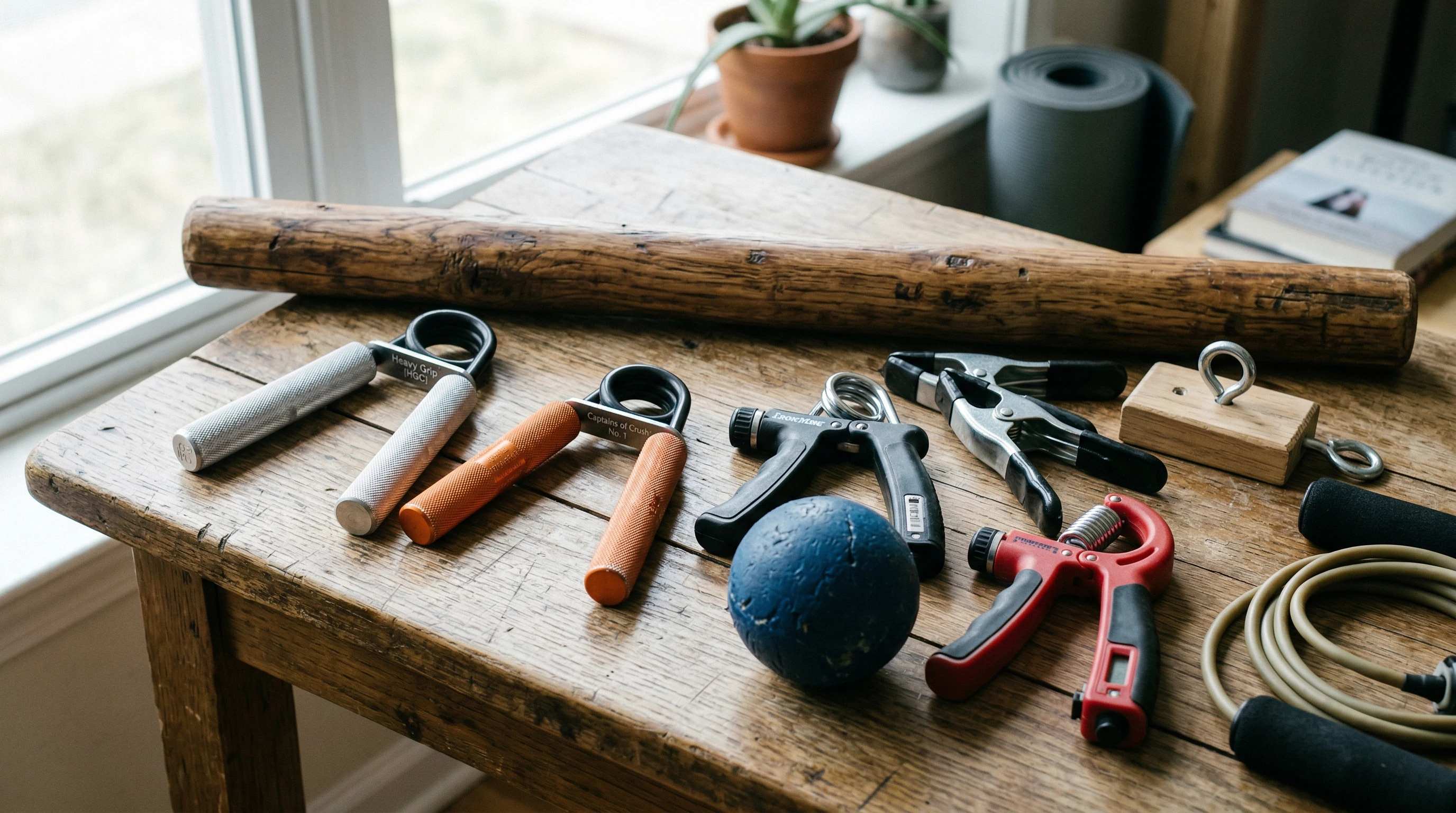
- Captains of Crush and grippers: These are specialized grip tools that give your hands a real workout by allowing you to increase the resistance. They’re worth checking out once you’ve built a basic foundation and want to test your limits further.
- Thick bar training: If you lift weights, using bars with a larger diameter or fat grips attached makes holding on tougher and works your forearms harder. Standard exercises become extra challenging when you mix in this type of grip.
- Sandbags and odd objects: Grab awkward things around the house, like sandbags, buckets, or even a heavy backpack, to challenge your hands in new positions. Trying different shapes and textures will train your grip in ways regular weights can’t.
Each of these ideas trains your grip from a different angle, helping you build wellrounded strength and better control in unpredictable situations. If you ever feel your routine has become stale, finding a new tool or odd object can renew your enthusiasm and push your grip training further.
Equipment That’s Actually Useful for Grip Strength
You don’t need a lot of specialty items to work on grip strength, but here are a few things I think are worth having around if you want to get serious:
- Hand grippers: These springloaded tools come in different resistance levels. They’re easy to keep at your desk or in your gym bag for quick sets throughout the day.
- Thick bars or fat grips: Attachments like Fat Gripz can be slipped onto dumbbells, pullup bars, or barbells to increase the challenge of standard exercises. If you don’t have access to these, even wrapping a towel around a bar can do the trick.
- Rice bucket: Filling a bucket with uncooked rice and digging, squeezing, or twisting your hands inside is an oldschool method that targets allaround hand strength. It’s simple yet surprisingly effective for finger and wrist endurance.
- Resistance bands: Use these to add tension to finger extension exercises, which balances out the constant gripping and helps prevent overuse issues. Add them to your grip sessions for a more rounded strength plan.
You can start with almost anything you already have at home and add these tools as you go. What’s important is variety; mixing up the types of exercises so your hands and arms have a reason to adapt, grow, and stay healthy.
Grip Strength: Frequently Asked Questions
Here are a few common questions I hear from people starting their grip adventure:
Question: How long does it take to see results from grip strength training?
Answer: With consistent training two to four times a week, most people notice stronger grip within four to six weeks. It might happen even sooner if you also use your hands for work or sports. Staying patient and pushing yourself a little bit each week is key.
Question: Can grip strength help with sports?
Answer: Definitely! Sports like climbing, tennis, golf, and CrossFit all rely on strong grip. Better grip can translate to more power, smoother technique, and less fatigue during activity. Many athletes see improvements in other areas simply because their hands can handle more.
Question: What if I have wrist or hand pain?
Answer: Mild muscle soreness is pretty normal, but sharp pain is not. Take longer breaks and focus on good technique. If pain sticks around, talk to a healthcare professional for guidance. Warming up and stretching your wrists and fingers before and after workouts can help tone down discomfort.
Sticking With It for Long-Term Progress
Improving grip strength benefits just about everyone, and it doesn’t take a lot of time or equipment to get solid results. Consistency is super important, and mixing up exercises keeps things interesting while challenging your hands in new ways. If you stick with it, you’ll have more control, better performance in daily activities and sports, and even a lower risk of injuries. You may also notice daily tasks — from carrying shopping, to working around the house, to athletic hobbies — becoming smoother and less tiring.
Start with what you have, stay patient, and watch your grip (and confidence) grow steadily over time.