 If you’re aiming to hit the ball farther and more accurately on the golf course, building strength is a pretty straightforward way to give your swing a serious upgrade. You don’t need to be a bodybuilder, but a stronger body definitely brings more distance, better stability, and smoother form to each shot.
Golf isn’t just about skill and technique. A weak core or tight hips can mess with your speed, balance, and even make you more likely to get injured. The good news? It doesn’t take hours in the gym. Just ten well-chosen strength exercises, done regularly, can help unlock more power and consistency in your swing.
This list covers the top 10 strength exercises every golfer should check out to give their swing some extra punch. They’re easy to fit into your weekly routine and you don’t need to spend a fortune on fancy gym equipment. Most of these moves require just a set of dumbbells, a resistance band, or your own body weight.
1. Deadlifts: The Foundation for Power
Deadlifts train your glutes, hamstrings, lower back, and core, right where power for your swing comes from. This movement helps you drive through the ball and stabilize your body so you don’t fall out of balance during that big finish.
Start with your feet shoulder width apart, grab a barbell or pair of dumbbells, hinge at your hips, and keep your chest up as you lift. Focus on solid form over heavy weight, especially at the beginning.
Why It’s Useful:
- Builds a strong base for your swing rotation
- Toughens up muscles that fire during your downswing
- Teaches you how to move from your hips, not your lower back
2. Goblet Squats: Lower Body Stability
Goblet squats are a pretty handy squat variation for all levels. Holding a dumbbell or kettlebell at your chest lets you nail the squat motion while keeping your chest upright, which is a big plus for golfers.
Lower yourself down as if sitting into a chair, push your knees out, and come up by pressing through your heels. This move tests your quads, hips, core, and glutes.
Why It’s Useful:
- Improves hip mobility for a full backswing
- Makes it easier to stay grounded and balanced through your shot
- Builds endurance in your lower body for long rounds on the course
3. Rotational Medicine Ball Throws: Explosive Swing Speed
This exercise is one of my favorites because it mimics the power phase of a golf swing. Stand sideways to a wall, hold a medicine ball at your side, and rotate your torso to sling the ball against the wall as hard as you can.
It’s perfect for training speed and controlling your core, both of which help you whip through the ball.
Why It’s Useful:
- Fires up your obliques and entire core
- Boosts rotational explosiveness
- Helps with both distance and rhythm
4. Single Leg Romanian Deadlifts: Balance and Hip Stability
Balance can make or break your follow-through. Single leg Romanian deadlifts help build strength in the posterior chain (the back of your legs), while testing your balance and coordination.
Hold a dumbbell in one hand, tip forward at your hip, letting the other leg extend behind you. Don’t be surprised if this takes some practice, but the payoff is super noticeable on the course.
Why It’s Useful:
- Prevents swaying during your swing
- Improves single leg stability for a more controlled finish
- Strengthens hamstrings and glutes to support strong rotation
5. Pallof Press: Core Stability for Swing Control
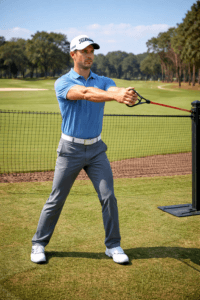
The Pallof press might not look flashy, but it’s a core killer. Stand side-on to a cable machine or resistance band, hold the handle at your chest, and press it straight out while fighting the urge to rotate.
This move trains your core to resist unwanted rotation, which protects your back and helps you control your swing.
Why It’s Useful:
- Trains the core to stabilize during the swing
- Reduces risk of injuries around the spine
- Keeps your body moving in sync through impact
6. Pushups: Upper Body and Core Power
Pushups are a classic because they build strength in your chest, shoulders, and arms, all of which help with the control and speed of your swing. They also hit your core when done carefully.
If regular pushups get easy, try putting your feet up on a bench or adding a resistance band for more challenge.
Why It’s Useful:
- Makes your arms and shoulders stronger for a smoother follow-through
- Supports posture and control during the swing
- Reinforces a strong core connection
7. Cable Woodchops: Dynamic Rotational Strength
Woodchops train you to turn your whole body as you rotate, much like how you swing a golf club. You can do these with a cable machine, resistance band, or even a medicine ball.
Start with the weight high, pull or swing it down and across your body with control, ending near your opposite knee. This move is super useful for sequencing your torso, hips, and shoulders.
Why It’s Useful:
- Builds coordination between upper and lower body
- Strengthens rotational muscles for efficient power transfer
- Improves your finish and follow-through
8. Farmers Walks: Functional Grip and Full Body Strength
Carrying a pair of heavy dumbbells as you walk isn’t fancy, but it pays off. Farmers walks give you a grip of steel, stronger shoulders, and better postural endurance, which is useful for golf and everyday life.
Just pick up heavy weights, keep your shoulders back, and walk with steady steps for 30 to 60 seconds at a time.
Why It’s Useful:
- Improves grip strength to manage the club with control
- Builds full body endurance for long rounds
- Promotes posture and stability
9. Hip Bridges: Unlock Your Glutes
Hip bridges or glute bridges focus on the powerhouse muscles, the glutes. Lie on your back, bend your knees, feet on the floor, then drive your hips up and squeeze your glutes at the top.
Add a resistance band around your legs or a weight on your hips for extra challenge. Strong glutes keep you safe from back pain and turn more of your body into usable power.
Why It’s Useful:
- Activates glutes for a stronger downswing
- Relieves pressure from your lower back
- Supports hip speed and balance
10. Plank Variations: Total Core Strength
Planks aren’t just about holding still. Regular planks, side planks, or adding shoulder taps test your entire core’s strength and stability.
If you want more challenge, try moving your feet closer together or lift one leg at a time. Core strength built with planks helps you maintain posture from address to follow-through.
Why It’s Useful:
- Stabilizes you during every phase of your swing
- Reduces unwanted sway or slide
- Protects your lower back over 18 holes
Boosting Your Training: Putting It All Together
Start with two to three strength sessions per week. Pick five or six exercises from this list and run through 2 to 3 sets of 8 to 12 reps (or up to 60 seconds for endurance moves like farmers walks or planks). Don’t rush the reps; quality and control matter more than how much you can lift.
If you’re not sure about your form, looking up a quick video or working with a coach is pretty helpful. Mix these exercises with regular golf practice and you’ll feel stronger and more coordinated in your swing before long.
To get even more out of your routine, focus on warming up with simple stretches for your shoulders, hips, and back before you start. Then, cool down with some gentle twisting stretches or foam rolling right after your workout. This helps keep your muscles loose and lowers your chance of injury, especially if you’re practicing or playing multiple times each week.
Final Thoughts
These 10 strength moves aren’t just for lowering your handicap; they’re for improving how you move, staying injury free, and feeling more confident at address. Golfers at any age or skill level can benefit from some basic strength work in their weekly routine. Stronger muscles, a stable core, and more balanced movements help you get the most from your game, making those long days on the links both more fun and far less tiring. So lace up your shoes, grab some weights, and watch as a little extra strength goes a long way for your swing and your scorecard.